
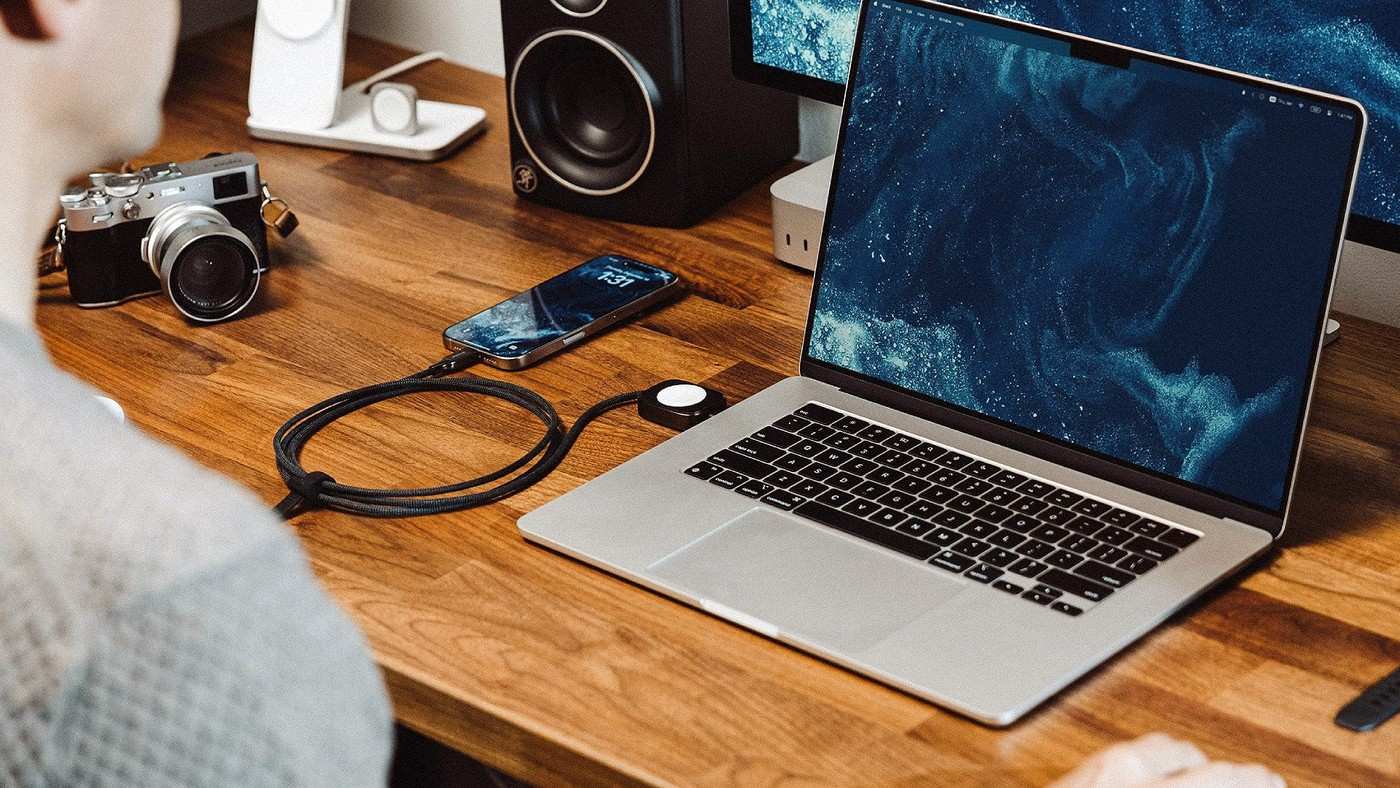
Nomad's Watch Lead Combines Two Charging Connections
See how the integrated layout reduces separate leads
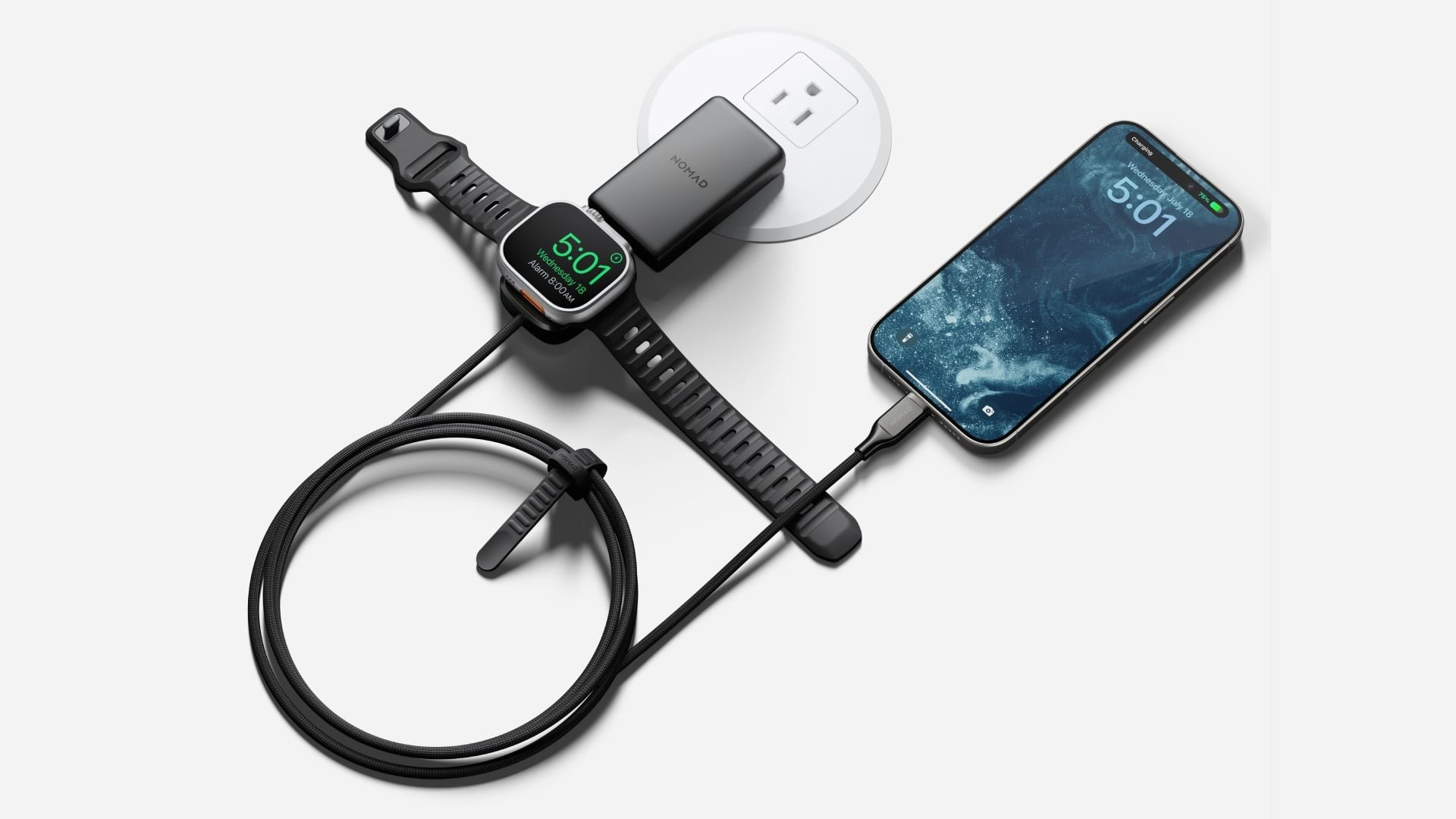
TechRadar reports on Nomad's Universal Cable for Apple Watch, a braided USB-C lead with a watch charging puck built in near the device end. It is designed to charge compatible equipment without carrying a separate watch cable alongside a phone or computer lead. The puck is part of the cable rather than an attachment added only when required. Consider how that layout fits the charging position at a desk or bedside. A combined accessory can reduce loose pieces, but it also fixes the relationship between the two charging points, which may suit some arrangements better than others.
Read available power without assuming device demand
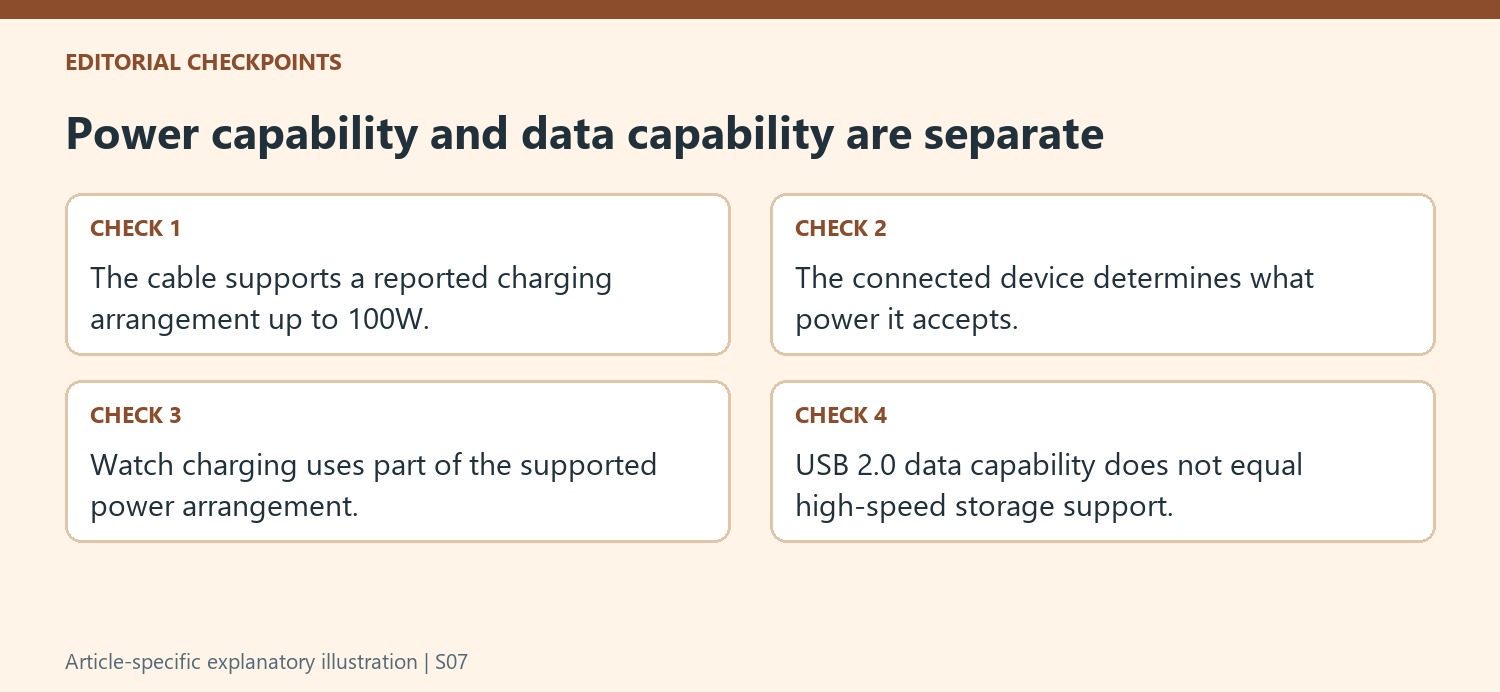
The source describes power capability up to one hundred watts and a different allocation when the watch connection is also used. That is an available limit under appropriate conditions, not a statement that an iPhone or another device continuously receives that amount. A suitable power supply and compatible receiving device are still necessary. Check the current manufacturer's supported models and distribution details before relying on the combined arrangement for a laptop and watch. The integrated puck's presence does not change the charging requirements of either device, and a high cable rating cannot make an insufficient adapter supply more power.
Keep the charging purpose separate from data use
Nomad's data rating is described as USB 2 performance, so the cable should not be chosen for a demanding storage or docking task solely because its charging rating is high. Decide which role matters most and compare the specification for that function. The article also raises price as a substantial tradeoff against the convenience of carrying fewer leads. Verify the current cost and version rather than treating launch pricing as permanent. A combined charging cable can be worthwhile when it replaces pieces regularly used together, but its value depends on actual device compatibility, physical placement and the importance of the separate data limitation.
Separate a cable rating from a device's charging speed
The reported 100W capability describes the cable's supported power arrangement, not the amount that every phone will accept. A compatible power source and the connected device's input limits remain decisive. When the watch puck is in use, the source describes a portion of the available power being reserved for that connection. This is useful for understanding why the cable is a combined system rather than two unrelated leads joined together. Before planning to use it with a laptop, compare the current cable specification and the adapter's output with that computer's needs. A powerful cable cannot compensate for an undersized wall adapter or override a device's own charging limits.
Check whether the charging puck fits the travel routine
The integrated Apple Watch puck is the feature that reduces the number of separate charging pieces. It sits close to the device-end USB-C connection on the 1.5-meter lead, so the positions of both products matter when laying them on a table or bedside surface. The design makes particular sense when a suitable watch and a USB-C device are repeatedly charged together. It offers less benefit to someone who never needs that watch connection. The source also mentions compatible recent AirPods cases, but compatibility should be checked for the exact case rather than assumed from the brand name. Pack and position the complete charging arrangement with both endpoints in mind.
Do not choose this lead for fast file transfers
The source explicitly identifies USB 2.0 data transfer, with a maximum signaling rate of 480Mbps. That puts the product's emphasis on charging convenience rather than high-speed storage work, despite the USB-C connectors and substantial power rating. A user moving large files should evaluate an appropriate data cable separately. The reported launch price also puts the design in a premium category, making the integrated puck the main feature to value. Compare its present cost with a suitable conventional cable and watch charger, while allowing for the convenience of fewer separate pieces. The best case for the Nomad lead is a specific repeat charging need, rather than an assumption that one expensive cable is automatically the best solution for every connection.
References
The Universal Cable integrates an Apple Watch puck near a USB-C end, while data performance and shared power remain separate limits.


Leave a Comment
Comments (0)