
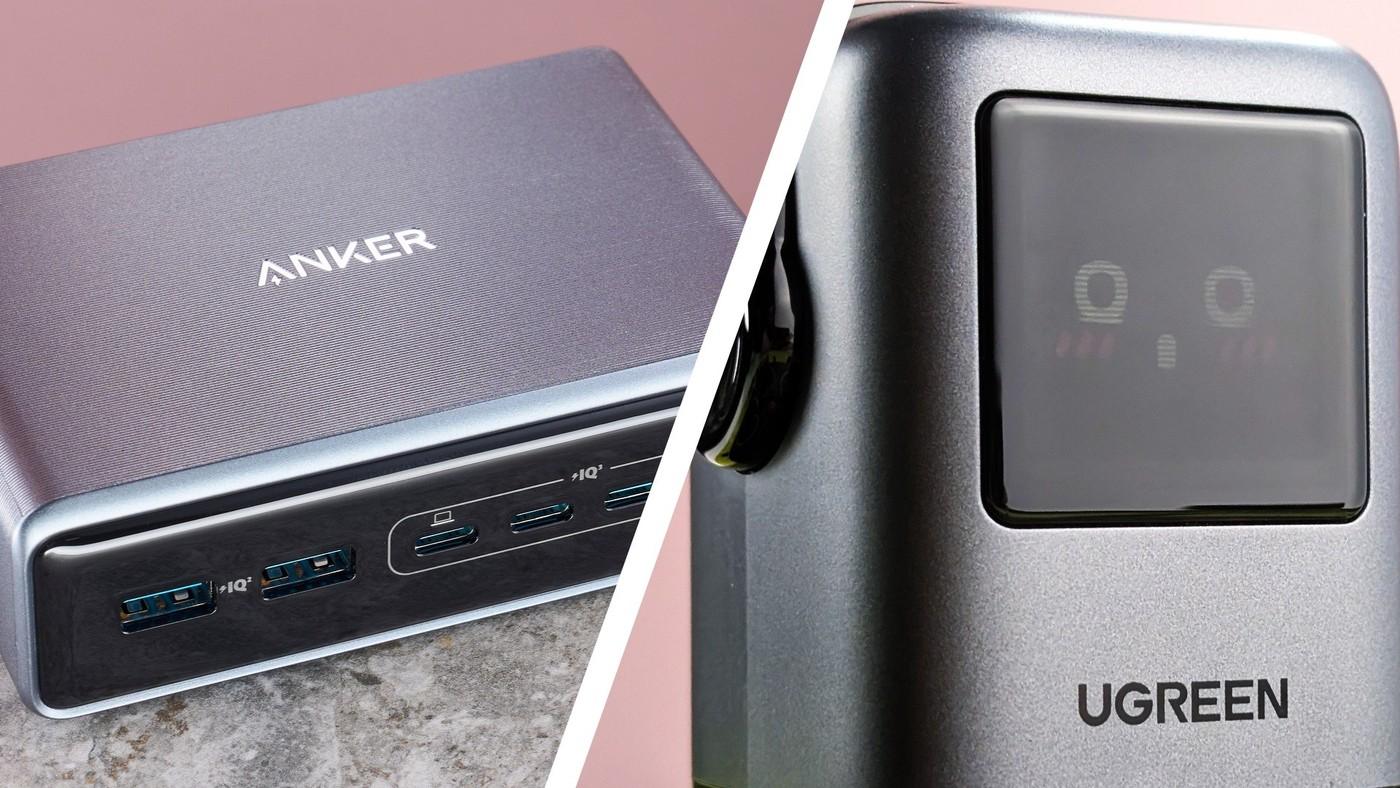
Plan Shared Charging Around Port Mix and Power
Distinguish a desk charging role from travel use
TechRadar's writer describes several chargers kept in regular use after reviewing many alternatives. A multiport desktop supply serves a different role from a small portable battery or wireless charging accessory. Begin with where the equipment will be used and whether it needs stored energy away from an outlet. The writer's preference is useful as an account of personal experience, not a universal ranking for every household. A device that keeps one desk organized may be unnecessarily large for a small travel bag, while a compact battery may not suit repeated laptop charging throughout a working day.
Count connections before comparing the largest rating
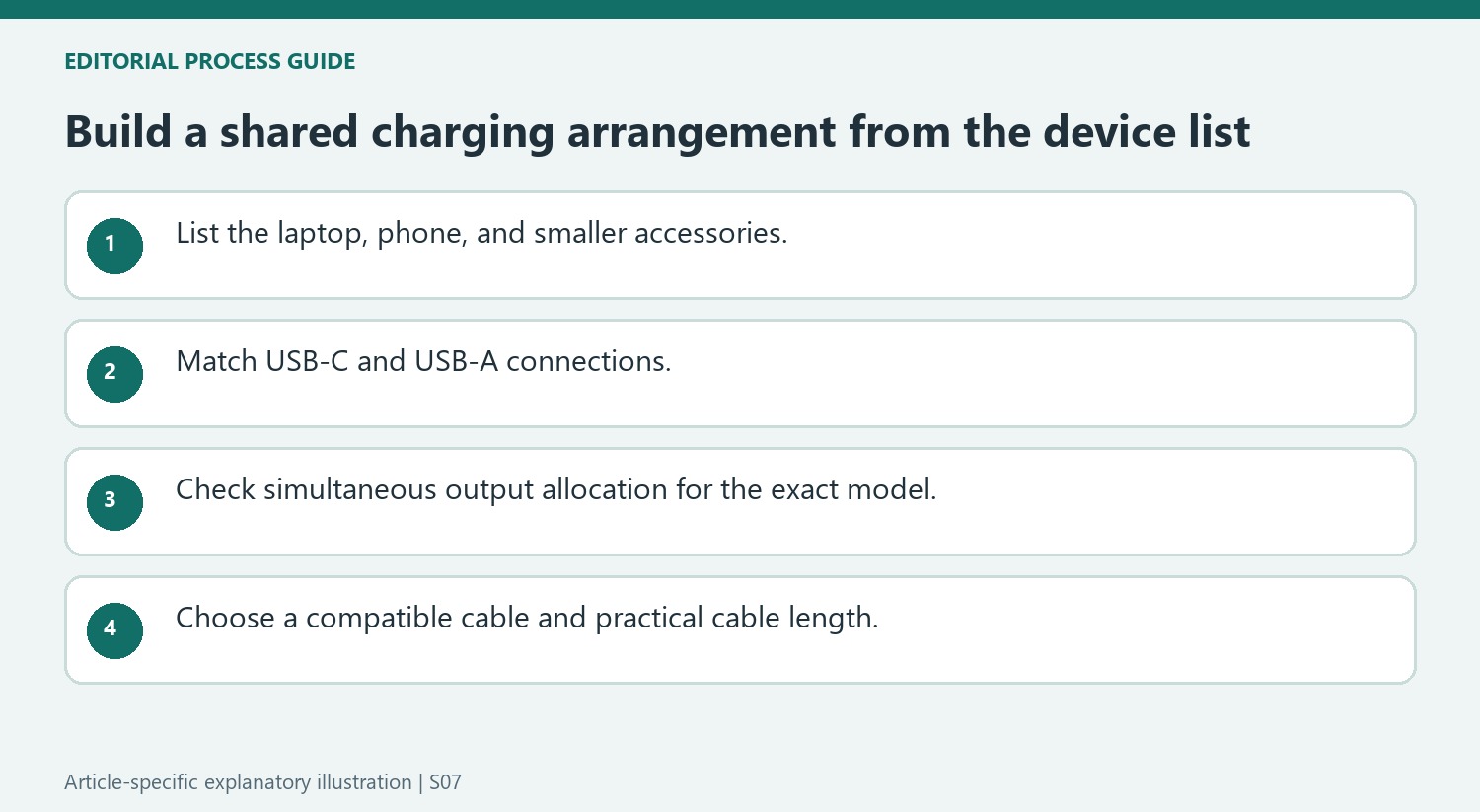
The article's desktop example provides several USB-C and USB-A sockets, making its connector mix part of its usefulness. Compare the actual devices that need power at the same time and check the manufacturer's distribution table for that combination. A total maximum does not establish an identical output at every socket. The same principle applies to portable products with integrated cables and an additional port: their available charging modes still need checking separately. A convenient layout can reduce scattered adapters, but only if the supported connections and shared power meet the intended load without repeated swapping.
Use the reviewer's experience as a defined example
The source reports extended use of selected products and describes practical preferences such as a built in cable, visible status information or less desk clutter. Keep those observations attributed rather than turning them into guarantees about durability or performance. Verify current models, prices and charging compatibility before copying the entire setup. Wireless and wired charging roles may also have different device requirements. Choose the smallest collection that covers the actual routine, with suitable cables for each task. A considered arrangement brings the number of chargers, their port mix and their power sharing behavior together instead of prioritizing one impressive headline figure.
Read the port mix alongside the combined output
The desktop Anker example in the source combines four USB-C and two USB-A ports with a 200W maximum rating. That is useful context for a desk with several products, but the total should not be read as a separate 200W entitlement for every socket. The relevant comparison is the supported output arrangement when the intended devices are connected together. List the laptop, phone, and smaller accessories, then examine the current allocation specifications. A charger that consolidates several wall adapters can improve the arrangement, but the correct combination depends on the actual loads. Connector variety and available power solve related problems and should be checked together.
Distinguish a portable reserve from a desk supply
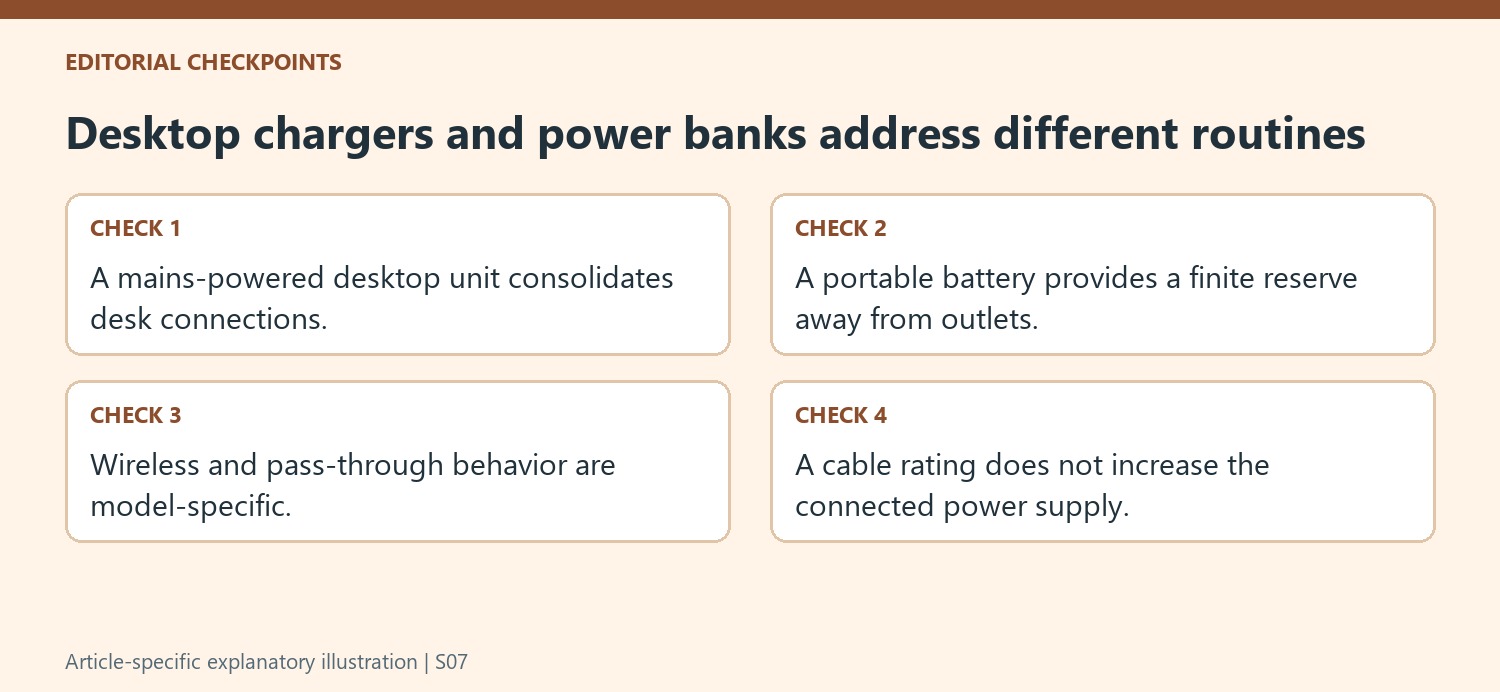
The article's 10,000mAh power banks serve a different role from a mains-powered desktop charger. They provide a portable reserve for smaller devices, with the Nano example emphasizing 45W output and a built-in cable. The MagFlow example adds a wireless surface, an additional USB-C connection, and a retractable lead, with the reviewer describing a useful charging arrangement while it receives power. Those are specific reported capabilities, not a reason to assume every power bank supports the same simultaneous behavior. Compare the precise model's instructions, capacity, and supported modes. For a phone-oriented travel routine, convenient connections can matter more than choosing the product with the largest desktop-style wattage claim.
Treat the cable as part of the charging setup
The reviewer's preferred USB-C cable is rated for up to 240W, but a cable does not create that much power from a lower-output charger. Its role is to support a compatible connection within the limits of the complete system. Length and flexibility also affect everyday use, particularly when an outlet is farther from the desk or bed. The article combines the reviewer's personal experience with particular products, including long-term use; those observations remain attributed experience rather than a universal durability guarantee. A useful purchase decision takes that context alongside the current specifications and price. Match charger, cable, and device as a set, then consider whether the arrangement stays convenient when several items need power at once.
References
A TechRadar writer's preferred chargers illustrate different roles for desk hubs, portable batteries and integrated cables.


Leave a Comment
Comments (0)