
Lenovo Go Stores Its Charging Cable Around the Body
Consider the cable as part of the carrying routine
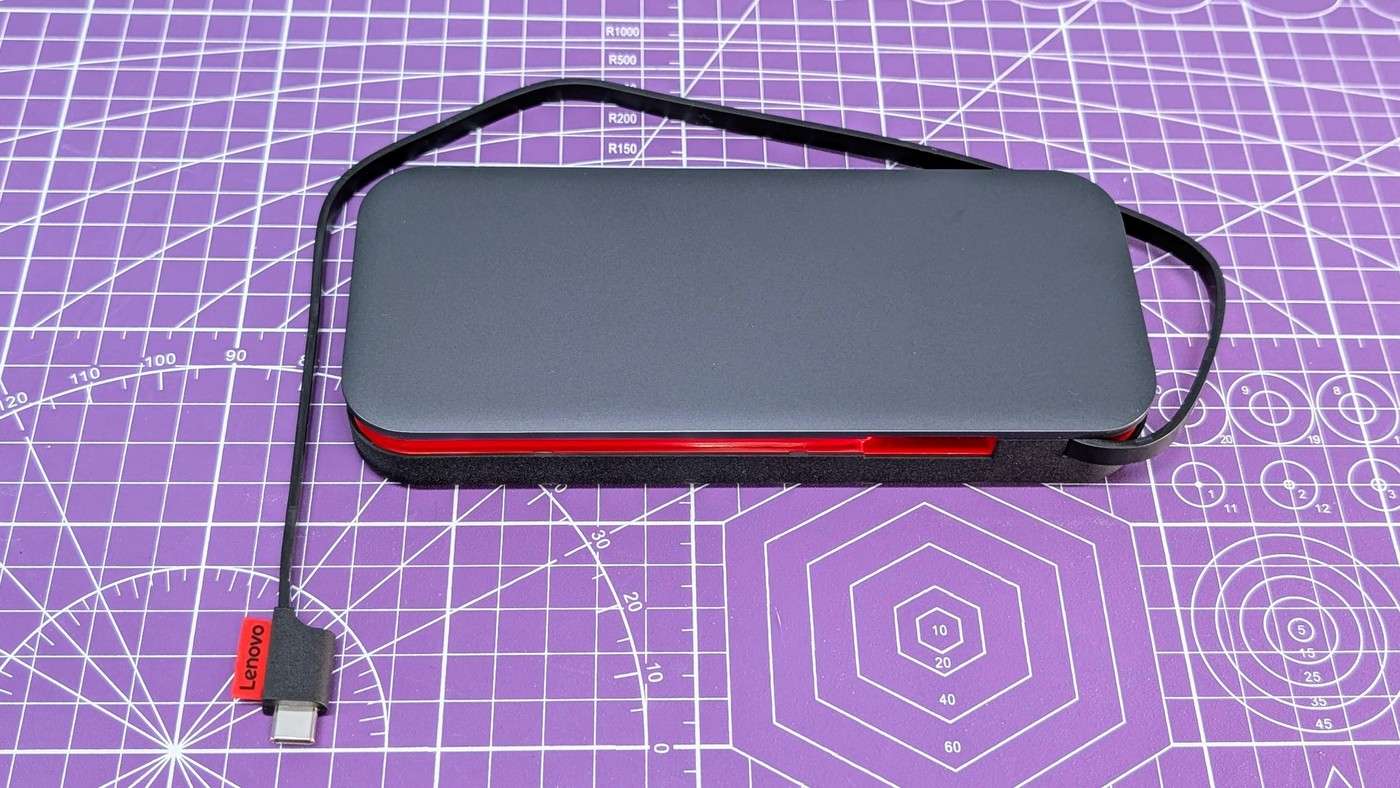
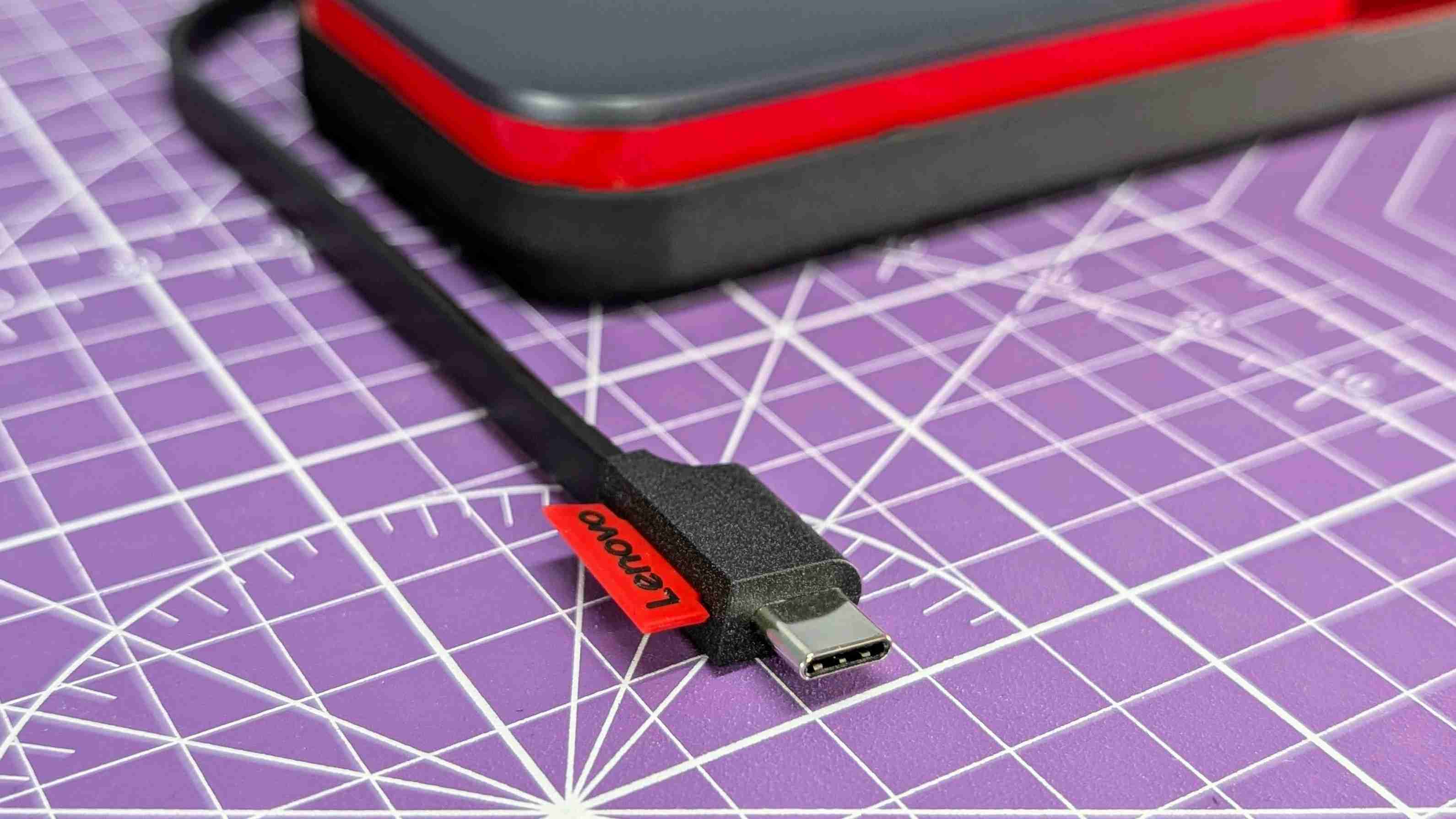
TechRadar's Lenovo Go review focuses on a built in USB-C cable that wraps into a recess around the power bank. The forty four centimeter lead reduces the need to carry a separate cable for a compatible device, while a USB-C socket and USB-A socket provide other connection options. The reviewer found deployment straightforward but described neat restowage as slightly fiddly. A thicker protective end may also be awkward around tight sockets or phone cases. Those handling details matter alongside capacity because an integrated lead is useful only when it reaches and fits the equipment normally carried.
Read power modes beyond the maximum wattage
The review describes USB-C output up to sixty five watts, but also notes the absence of PPS and a twelve volt USB-C output mode. This affects particular device charging expectations even when the headline power appears sufficient. Compare the intended laptop or phone's requirements with the actual supported modes rather than assuming every fast charging label means the same thing. The source specifically identifies a limitation for Samsung's faster charging mode. When several devices are connected, check the product's power sharing behavior as well. The number of available connections is different from a promise of maximum output on all of them simultaneously.
Interpret tested capacity in its conditions
TechRadar reports different usable energy results at different output loads and describes a reduction in sustained maximum power after part of the charge is used. These observations are more informative than treating the nominal battery capacity as energy delivered without losses. The reviewer also found the physical design reasonably slim for carrying, while considering its value dependent on the purchase price. Verify current pricing and specifications rather than repeating an old sale claim. For travel, check current carrier rules and the actual label on the power bank. A convenient integrated cable complements a suitable charging specification; it does not replace that compatibility check.
Evaluate the integrated cable through the actual carrying routine
The reviewer highlights reduced bag clutter from the built-in lead, while also describing slightly fiddly restowage and a bulky protective end. Check the sockets and phone cases used in practice before assuming that a permanently attached cable eliminates every need for another lead. Its value depends on reaching and fitting the devices that normally travel with the power bank.
Consider how the cable is deployed on a desk or beside a laptop rather than only its nominal length. The recessed storage keeps it with the battery, but neat repacking remains part of the routine. The review’s handling observations should be attributed to the tested product, not generalized into a promise that every user will find the same case or port easy to access.
Compare supported charging modes with the intended devices
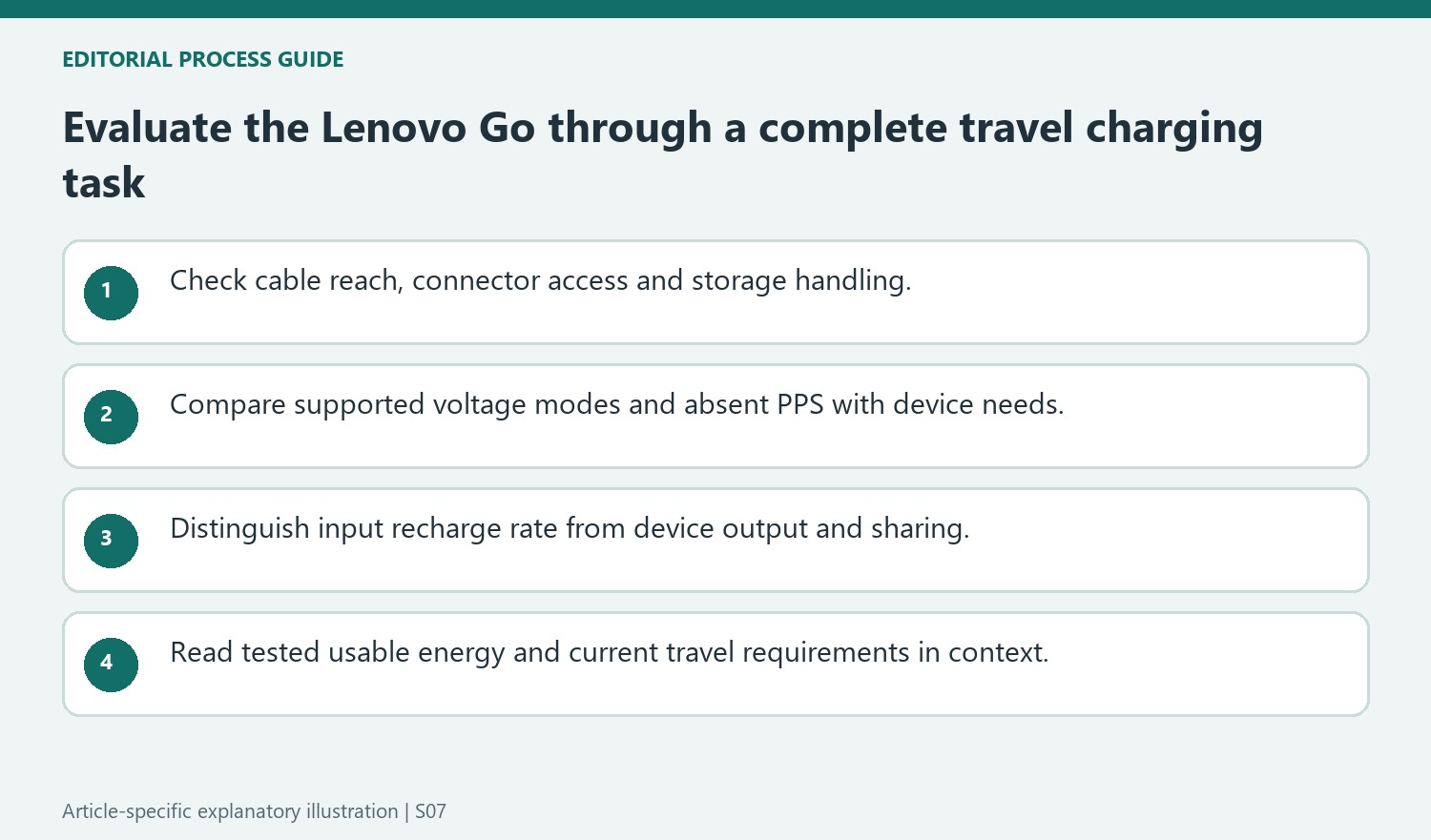
Up-to-65W output is one rating, while the available voltage modes and absence of PPS describe other compatibility conditions. The source specifically notes limitations for Samsung’s faster charging and devices needing a 12V USB-C option. Check the phone, laptop or accessory requirements instead of using the largest wattage as the complete compatibility test.
Distinguish power-bank input from output as well. A supported recharge rate into the battery does not describe what it delivers to a laptop. When several devices are attached, consult the actual sharing behavior rather than multiplying one port’s maximum by the number of connections. Keep the complete intended charging arrangement in view when judging whether the bank can support a travel session.
Interpret measured energy and value in context
The review reports usable energy at several loads and a reduced sustained maximum as charge falls. Those results show why nominal capacity is not identical to energy delivered at every output rate. Treat the measurements as the reviewer’s tested conditions and compare them with the actual workload. Check current price, warranty and travel rules separately from the historical review. A convenient cable and slim shape can improve portability, while suitable charging modes and realistic usable energy determine whether that convenience meets the devices’ power needs.
References
- Lenovo Go USB-C laptop power bank review: tame bag clutter thanks to a built-in charging cable | TechRadar. TechRadar; Lindsay Handmer.
TechRadar's review finds a built in USB-C lead convenient for travel while noting charging protocol and connector clearance limits.


Leave a Comment
Comments (0)